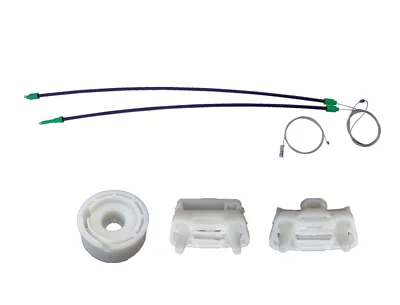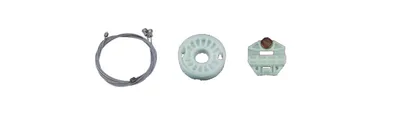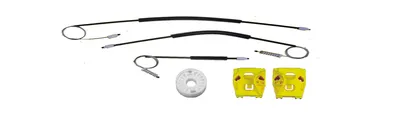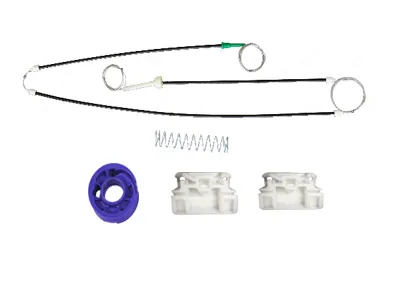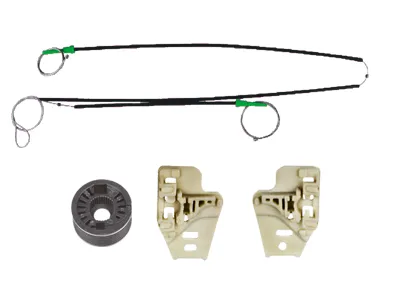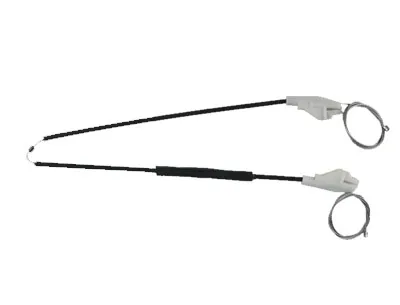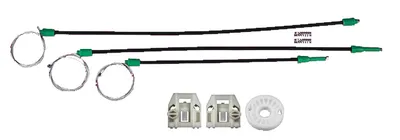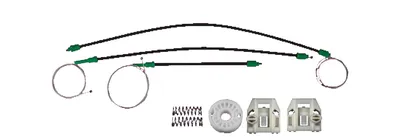
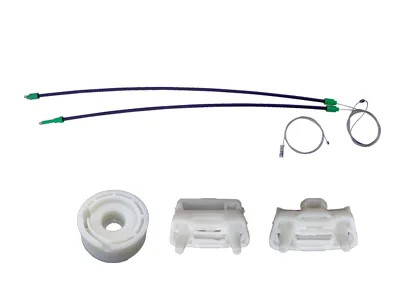
On most window regulator failures the motor is fine. What breaks is usually the pulley, and what snaps is the steel cable — and once those two are replaced with a repair kit, a complete regulator is not needed. The right diagnosis decides which route you take.
Diagnosis by Symptom
The motor whirs when you press the switch but the glass does not move: the motor is working. The cable has jumped off the pulley or snapped; this is the classic repair-kit case.
The glass tilts as it drops, or one corner catches: one of the two carriers holding the glass has come free, usually because the plastic clamp has broken.
A cracking noise, then the glass drops into the door: the pulley has broken and released the cable. Once the glass is down inside the door, nothing else should be attempted before the trim panel comes off.
No sound at all: this points at the electrical side, not the mechanism — fuse, switch or motor. A repair kit will not address it.
The glass moves very slowly and struggles: the run channel may be dirty or dry, but a cable that has begun to fray internally gives the same symptom.
Repair Kit or Complete Regulator?
On an otherwise sound mechanism, the pulley, cable and plastic carriers are the only parts that wear. The rail and body usually remain serviceable, so a repair kit cuts both cost and fitting time. If the rail is bent or cracked, the complete unit has to be replaced.
Four Facts Needed Before Ordering
In this group the model name alone is not enough. State four things together: model, front or rear, left or right, and generation (earlier or later model). Two generations of the same model use different kits, and the OEM prefix is usually the quickest way to tell them apart.
Window Regulator Repair Kits at MTJ
Our catalogue carries window regulator repair kits for 15 vehicle brands, from Fiat to BMW and Ford to Hyundai — one of the deepest ranges we hold. Send us the model and generation and we will match the right kit for you.